
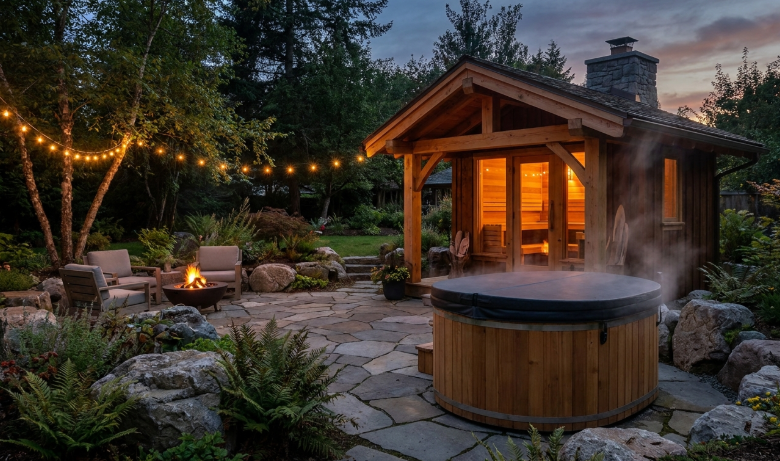
A 2 person sauna installation comes down to three requirements that determine whether the unit passes inspection and performs correctly: a dedicated 240-volt electrical circuit sized to the heater, a level and load-rated foundation, and manufacturer-specified clearances from combustible surfaces and property lines. Skipping any one of the three is the most common reason an otherwise well-built sauna underperforms or fails a permit inspection after the fact.
How Much Electrical Work Does a 2 Person Sauna Installation Need?
Most 2 person cabins use a 4.5 to 6 kilowatt heater, and heaters in that range almost always require a dedicated 240-volt circuit with a 30 to 40 amp breaker, confirmed against the exact amperage printed on the heater’s spec sheet. A licensed electrician should run this circuit from the panel, install a disconnect switch within sight of the heater, and verify the panel has spare capacity before work begins. Homes with an older or already-full panel sometimes need a subpanel added first, which is a cost worth pricing before ordering the sauna itself rather than after delivery.
See also: Eternal Peptides vs the Field: Alternatives Ranked
What Foundation Does a 2 Person Sauna Need?
An outdoor unit needs a level, stable surface that will not shift or settle unevenly over time, since an out-of-level cabin puts uneven stress on the joinery and can cause the door to bind. A compacted gravel pad with pavers is the most common budget option and works well in most climates. A poured concrete pad costs more but handles freeze-thaw cycles and heavy units, particularly barrel saunas, more predictably over many years. An existing wood deck can work if the framing is rated for the added static weight and the surface is fully level, though many installers still prefer a dedicated pad or a reinforced section rather than resting a curved barrel base directly on deck boards.
How Much Clearance Should You Leave Around the Unit?
Two separate clearance rules apply at once. The heater itself needs manufacturer-specified clearance from any wood surface, commonly 2 to 4 inches on the sides and more above the unit, enforced by a physical guard. Separately, the cabin as a whole often needs setback clearance from the property line and from the house’s combustible siding under local fire code, which varies by jurisdiction and is worth confirming with the building department before committing to a spot. Leaving at least 24 inches of clear space in front of the door for the swing and for entry and exit is also worth planning for, since a cabin technically sited within code but crowded against a fence or wall makes daily use awkward.
Do You Need a Permit to Install a 2 Person Sauna?
Typically yes for the electrical portion, since adding a new dedicated circuit is electrical work that most municipalities require to be permitted and inspected regardless of what the circuit powers. Some areas also require a building permit for a permanent outdoor structure above a certain size or height, even a prefabricated one. Skipping a required permit does not just risk a fine; it can complicate a future home sale, when an uninspected 240-volt circuit is exactly the kind of thing a buyer’s inspector flags.
What Roof and Weather Clearances Matter for Outdoor Units?
In snow-load climates, siting a barrel or cabin sauna where roof runoff or sliding snow from the house lands directly on the unit shortens the life of the roof and door seals considerably. A few feet of separation from the house’s drip line, or a small gutter diverter, is a simple detail that prevents years of unnecessary water exposure. Drainage around the pad itself also matters: grading the ground so water flows away from the foundation rather than pooling against it keeps the base of the cabin from sitting in standing water after heavy rain.
What Should You Confirm With the Manufacturer Before Digging or Wiring Anything?
Before scheduling an electrician or breaking ground on a pad, pull three numbers directly from the specific heater’s spec sheet rather than relying on general guidance from a forum post or a different model’s manual: the exact amperage draw at full load, the minimum clearance distance from combustible surfaces on all sides, and the maximum allowable distance between the heater’s control unit and any remote sensor if the model uses one. These numbers vary enough between brands and even between kilowatt tiers of the same brand that assuming a generic figure is a common way installers end up re-running wire or moving a pad after the fact. Most manufacturers publish this information directly on the product page or in a downloadable installation manual, and it is worth printing that page for the electrician’s first visit rather than describing the heater from memory.
It is also worth confirming who is responsible for what before work starts. A typical installation splits into the sauna assembly itself, which many owners handle on their own or with a local handyman, and the electrical work, which should always go to a licensed electrician regardless of how simple the wiring looks. Blurring that line, particularly having a non-electrician handle the final connection at the heater’s junction box, is one of the more common reasons an otherwise correct installation fails inspection.
What Does the Research Say About Sauna Use Once Installed Correctly?
A unit installed correctly, with proper electrical work and a stable foundation, is the kind that actually gets used consistently, which is where the reported benefits of sauna bathing concentrate. A systematic review in Evidence-Based Complementary and Alternative Medicine reported associations between regular dry sauna bathing and improved vascular and respiratory markers among frequent users. A 2018 review in Mayo Clinic Proceedings summarized comparable cardiovascular associations across multiple population studies. A 2023 follow-up review in the same journal examined sauna bathing combined with other lifestyle habits and found the combination associated with added benefit over sauna use alone. These are population-level associations, not proof of an outcome for any one person, and anyone managing a heart condition or who is pregnant should raise specific questions with a doctor before starting regular sessions. Retailers including Redwood Outdoors, Almost Heaven, and sweatdecks.com/collections/2-person-saunas list heater amperage, pad requirements, and clearance specs for each 2 person model directly on the product page, which is worth reviewing before finalizing a site plan with an electrician.
Frequently Asked Questions
Can a 2 person sauna run on a standard household outlet? Only very small infrared units under about 1.6 kilowatts. Most 2 person cabins need a dedicated 240-volt circuit.
How far should a 2 person sauna sit from the house? It depends on local fire and setback codes. Check with the building department before ordering.
Can you install a 2 person sauna on an existing wood deck? Sometimes, if the framing supports the added weight and the surface is level. A dedicated pad is often preferred.
Who should size the electrical circuit for a sauna heater? A licensed electrician, using the exact amperage on the heater’s spec sheet and the distance from the panel.
References
- Clinical Effects of Regular Dry Sauna Bathing: A Systematic Review, Evidence-Based Complementary and Alternative Medicine, 2018
- Cardiovascular and Other Health Benefits of Sauna Bathing: A Review of the Evidence, Mayo Clinic Proceedings, 2018
- Does the Combination of Finnish Sauna Bathing and Other Lifestyle Factors Confer Additional Health Benefits? A Review of the Evidence, Mayo Clinic Proceedings, 2023
By Mark Feldman

